School
A school day with a shadow teacher: the daily routine from gate to dispersal
Shadow teacher daily routine in an Indian school, from the gate to dispersal: what the child finds hard, what the shadow teacher does, and how help fades.

In this post
- 01Arrival and the handover from home
- 02Assembly: noise, standing and waiting
- 03What does a shadow teacher do in the first lesson?
- 04Transitions and specialist lessons
- 05Break and lunch
- 06Group work and unit tests
- 07The last period and dispersal
- 08What goes in a shadow teacher's daily note?
- 09How the support shrinks over the year
A shadow teacher's daily routine follows the child's school day from the handover at the gate to dispersal: settling in, assembly, lessons, the moves between rooms, break and lunch, group work and tests, and a short note for home. At every point the job is the same: give the least help that lets the child take part, and give less of it as the weeks go by. Here is an ordinary day in an Indian school, stage by stage, with what children commonly find hard, what the shadow teacher does, and how that support is meant to shrink.
Arrival and the handover from home
The day starts before the bell. Whoever brings the child, whether a parent, a driver or the bus attendant, hands them to the shadow teacher at the gate or in the classroom, as the school has agreed. The handover takes a minute and carries the one piece of news that can change the morning: a short night, a skipped breakfast, a cousin visiting. When there is no time at the gate, a message before school does the same job.
The hard part here is the change itself: from home to school, from one adult to another, from a quiet car to a crowded corridor. The shadow teacher keeps arrival the same every day: the same greeting, the bag and bottle put away in the same place, the day's visual schedule looked at together, and a few settling minutes before the class begins. Over the first term the handover moves from the gate to the classroom door, and then to a wave from across the room as the child walks in with classmates.
Assembly: noise, standing and waiting
Assembly is loud, long and unpredictable: a microphone that whistles, the prayer, the pledge, the thought for the day, announcements that run over, and hundreds of children standing close together, often in the sun. For many children with autism or sensory processing differences it is the hardest part of the morning, and it comes before the first lesson has even begun.
The shadow teacher works to what the school and the child's occupational therapist have agreed: standing at the end of the row rather than the middle, headphones for the loudest part, joining for the prayer and leaving before the announcements, or a small job such as carrying the attendance register. The plan is to lengthen the time the child manages, week by week, until they stand with the class for all of it, or for the parts that matter most.
What does a shadow teacher do in the first lesson?
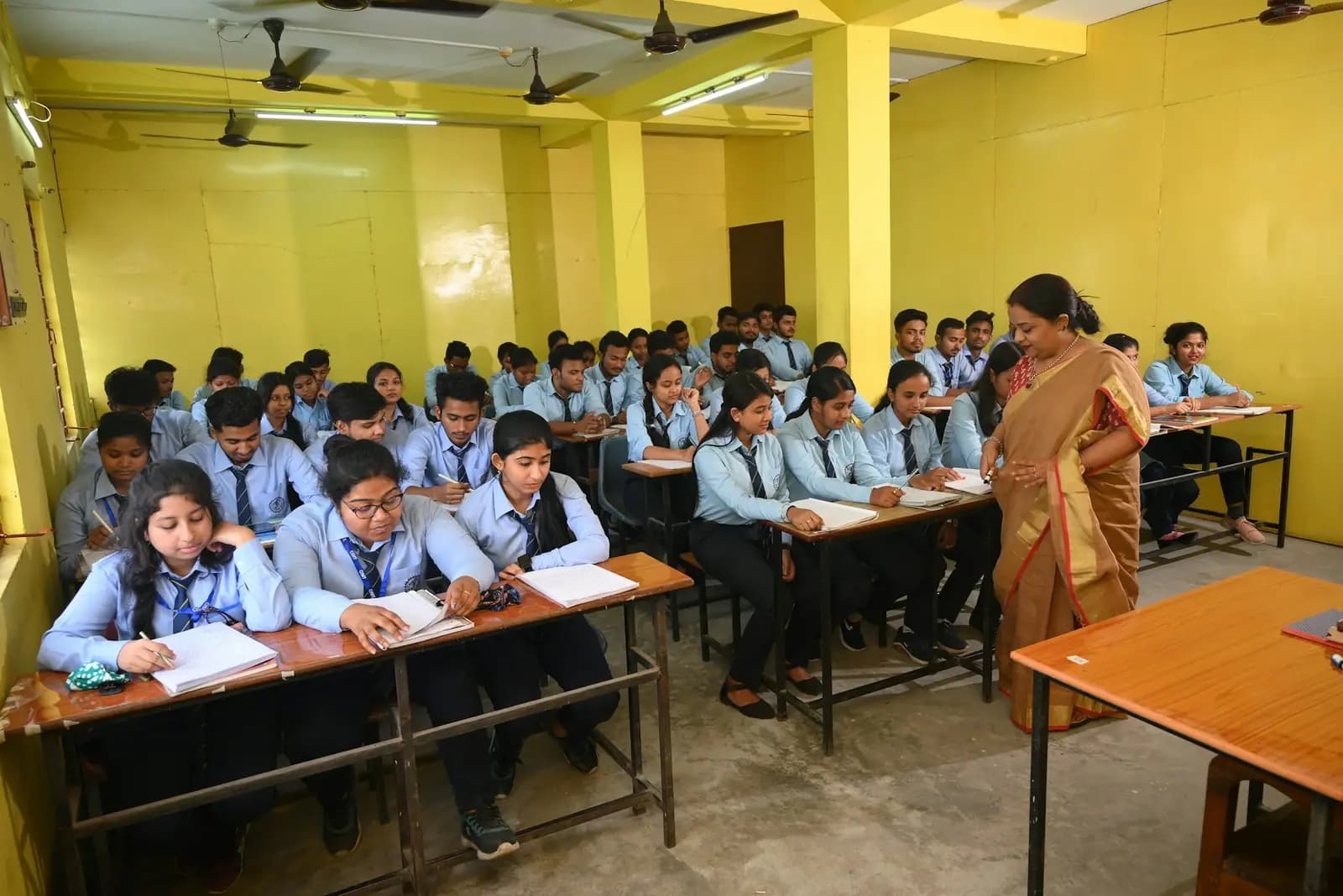
In the first lesson the class teacher gives an instruction to thirty or more children; the shadow teacher checks that it reached one of them. That usually means the right book open at the right page, the date and heading copied from the board, and the first step of the task begun. A child who misses this is rarely being careless: the instruction was long, came while they were still unpacking, or hinged on a word they did not catch.
The shadow teacher sits beside or slightly behind the child, never between the child and the teacher, and waits a few seconds before helping. When help is needed it is the smallest that works: a finger on the right line, the instruction repeated in fewer words, three steps on a sticky note. They do not write for the child or answer for them, and the class teacher remains the child's teacher. As the weeks pass the chair moves back, the child writes their own sticky notes, and the shadow teacher's first question becomes whether to do anything at all.
Transitions and specialist lessons
Transitions are where many school days go wrong. The bell, the rush in the corridor, the stairs to the computer lab, a different teacher with different rules: each change asks the child to stop one thing, move, and start another. Specialist lessons add a teacher who may not know the child's plan at all. The shadow teacher gives a warning before each move, walks with the class rather than ahead of it, and makes sure every specialist teacher has a one-page note on what helps.
| Lesson | Often hard | What the shadow teacher does |
|---|---|---|
| PE | Heat, noise and open space; fast team games; waiting in line | Explains the game beforehand, gives the child a clear role, agrees shade and water breaks |
| Music | Loud instruments, group singing, the echo of the hall | Arranges a seat near the door, headphones if the occupational therapist has advised them, and a way to join for part of the lesson |
| Computers | Logging in, waiting for a turn, a crowded lab | Practises the login steps, agrees a fixed seat, makes turns visible |
| Library | Choosing a book, keeping quiet, borrowing rules | Narrows the choice to a shelf or two, practises borrowing, keeps early visits short |
Over the year the warnings move from the shadow teacher's voice to the child's own timetable card, and the shadow teacher starts waiting at the door of the lessons the child now manages, then stops going to them at all.
Break and lunch
Unstructured time is often harder than lessons. There is no teacher giving instructions, the noise rises, the games have rules nobody explains, and the lunchbox has to be opened, eaten from and closed again in a fixed number of minutes. Some children wander, some hide, and some join a game only to find it has changed around them. The shadow teacher needs a break too, so agree with the school in writing who is responsible for the child during those minutes.
At break the shadow teacher's job is to set up the conditions and then step out of them: teaching a playground game beforehand, pairing the child with a classmate for something simple, finding a quieter corner for the days the playground is too much, and practising the lunchbox and bottle until the child manages both alone. Classmates approach a child far more readily when no adult is beside them, which is why, for many children, break is where the shadow teacher first watches from across the playground.
Group work and unit tests
Group work asks for several things at once: listening to classmates, waiting for a turn, agreeing, and doing a share of a task that nobody has divided clearly. The shadow teacher helps the child take a defined role, such as reading out the question, drawing the diagram or keeping time, and then steps back so the group talks to the child directly. When a classmate asks the shadow teacher something about the child, the question goes back to the child.
Unit tests and class tests follow the school's rules and the child's IEP. Depending on what the school allows, the shadow teacher may read a question aloud, keep the child on the paper or sit with them in a separate room; they never give answers, hints or corrections. If a test causes distress, raise it with the coordinator before the next one, not during the paper. What helps with meltdowns at school covers the plan for a test day that goes wrong.
The last period and dispersal
By the last period most children are tired, and the ones who have held themselves together all morning are the most tired of all. The shadow teacher lowers demands where the teacher agrees, makes sure homework is written in the diary by the child rather than for them, and checks the bag against the next day's timetable. Many difficult moments happen here, and the cause is usually the whole day behind the child rather than the lesson itself.
Dispersal is crowded and loud: buses, vans, cars, parents at the gate, names called over a loudspeaker. The shadow teacher hands the child to the adult the school and family have named, and to nobody else. If the child travels by school bus, the attendant should know the one thing that helps when the ride goes badly. Over time the child walks to the bus bay with their class, and the shadow teacher's part shrinks to checking that the handover happened.
What goes in a shadow teacher's daily note?
The daily note is how the family, the school and the clinicians see a day none of them watched. It should be short, factual and written the same way every day, so that patterns show across weeks: the Mondays that go badly, the lessons that always go well, the prompt that is no longer needed. It is neither a report card nor a list of complaints. A note for a child in class two might read like this.
- Arrival: settled in five minutes; found the first lesson on the schedule without a reminder.
- Assembly: stood with the class for the prayer, then left as agreed for the announcements.
- Lessons: English and EVS alone; in maths needed a sticky note for the second sum, did the third unaided.
- Transitions: walked to the computer lab with the class; covered ears at the break bell.
- Break and lunch: ate most of the lunch; played catch with two classmates, then sat in the quiet corner.
- Hard moment: upset when music moved to the hall; used the signal, took a short break, returned for the last song.
- New today: asked a classmate for an eraser without a prompt.
- Homework: written in the diary by the child; Hindi worksheet in the blue folder.
- For tomorrow: sports day practice after assembly, so headphones in the bag, please.
The notes feed the monthly report, which sets them against the child's targets; what a good monthly report looks like describes it. Keep the notes in one place, on paper or in a shared file, not scattered through chat messages.
How the support shrinks over the year
The day described above is a first-term day. By the second term the same child might have the shadow teacher beside them only in maths and in tests, watched from across the room in English, and met at the door after music. Later still, the shadow teacher may be out of whole parts of the day. The reviews set the pace, not the calendar. When should a shadow teacher step back? explains how fading is planned.
Where the shadow teacher sits and what they may do at each point is the school's decision, so agree it in writing before the first day. Special Minds speaks to the school before any shadow teacher is placed, places one only with the school's agreement, and asks every shadow teacher it places for a daily note, with reviews at one week, thirty days and ninety days. It introduces vetted shadow teachers in Mumbai, Delhi NCR, Bengaluru, Hyderabad, Chennai, Kolkata, Pune and Ahmedabad.
Questions
What does a shadow teacher do all day?+
They support one child through each part of the school day: arrival, assembly, lessons, moves between rooms, break, lunch, tests and dispersal. The aim throughout is to help the child follow the teacher and join the class with as little adult help as possible, and to record the day in a short note for the family.
Does a shadow teacher stay with the child during break and lunch?+
Usually, at least in the first term, since unstructured time is hard for many children. Often they watch from a little way off and step in only when needed, so that classmates come forward. Their own lunch needs cover too, and the school should name who is responsible for the child then.
What does a shadow teacher do on sports day or a school trip?+
Whatever the school has agreed, settled well before the day. Usually that means preparing the child with the programme and a picture schedule, staying close in crowds and on transport, and planning a quiet spot and an early exit in case the day becomes too much.
Who does a shadow teacher report to during the school day?+
Usually to the class teacher for anything about lessons, and to the inclusion coordinator or school special educator for the plan as a whole. The family receives the daily note. The reporting line varies between schools, so confirm it before the first day.
Should a shadow teacher help other children in the class?+
Only if the school and family have agreed it, and never at the expense of the child they are there for. A little help to the whole table can make the child's support less conspicuous. Becoming a second classroom assistant is not the role.
Special Minds introduces and supports educational and care professionals. Nothing here is medical, psychological or legal advice, and the terms of any placement are set out in your written agreement, which you should have reviewed by your own adviser. Rules set by schools, boards and government bodies change; confirm the current version with the body concerned.
Read next
Keep reading

Hiring
What is a shadow teacher, and does your child need one?
12 min read

School
When should a shadow teacher step back? Fading support in planned stages
11 min read

Autism
Autism meltdowns at school: what helps before, during and after
11 min read
School
What a school inclusion coordinator needs from a family, and what to ask for in return
4 min read
Talk it through with a specialist
A private conversation about your child, in English or Hindi. No fee, no obligation.