Hiring
A special educator at home: what a good session looks like and how to judge it
What to expect from a special educator at home: a good session, arranging the hours, judging progress after a month, warning signs, and how to hire one.

In this post
- 01What does a special educator do at home?
- 02What does a good session look like?
- 03Where do the targets come from?
- 04How do families usually arrange the hours?
- 05Is it working? What to check after a month
- 06Working with the therapists and the school
- 07Briefing the household
- 08Warning signs
- 09How to hire a special educator at home
A special educator at home works with a child in structured sessions, usually after school, on the skills the school and the child's clinicians have identified: communication, attention, early academics, routines and independence. A good session has a start and an end, a visual schedule, a handful of named targets and a written record, and much of it happens inside ordinary routines rather than at a desk. Here is what that looks like in practice, how families usually arrange the hours, how to judge after a month whether it is working, the warning signs, and how to hire one.
What does a special educator do at home?
A special educator teaches the skills that make school and home workable for a child who learns differently. For an autistic child that might be asking for help, waiting for a turn, following a schedule and coping with change. For a child with a developmental delay it might be early number and letter work, dressing, eating with the family and following a two-step instruction. For many children it is also the homework routine, taught so that the child can gradually run it themselves.
This is different from a home tutor. A tutor covers the syllabus and helps the child keep up with this week's lessons. A special educator works on the skills underneath and around the syllabus, to a written plan, and records what happens so that the school and the therapists can use it. Families searching for a home tutor for a child with special needs are often looking for a special educator, and it helps to know which one you are interviewing. Shadow teacher, special educator or remedial teacher sets out the three roles side by side.
What does a good session look like?
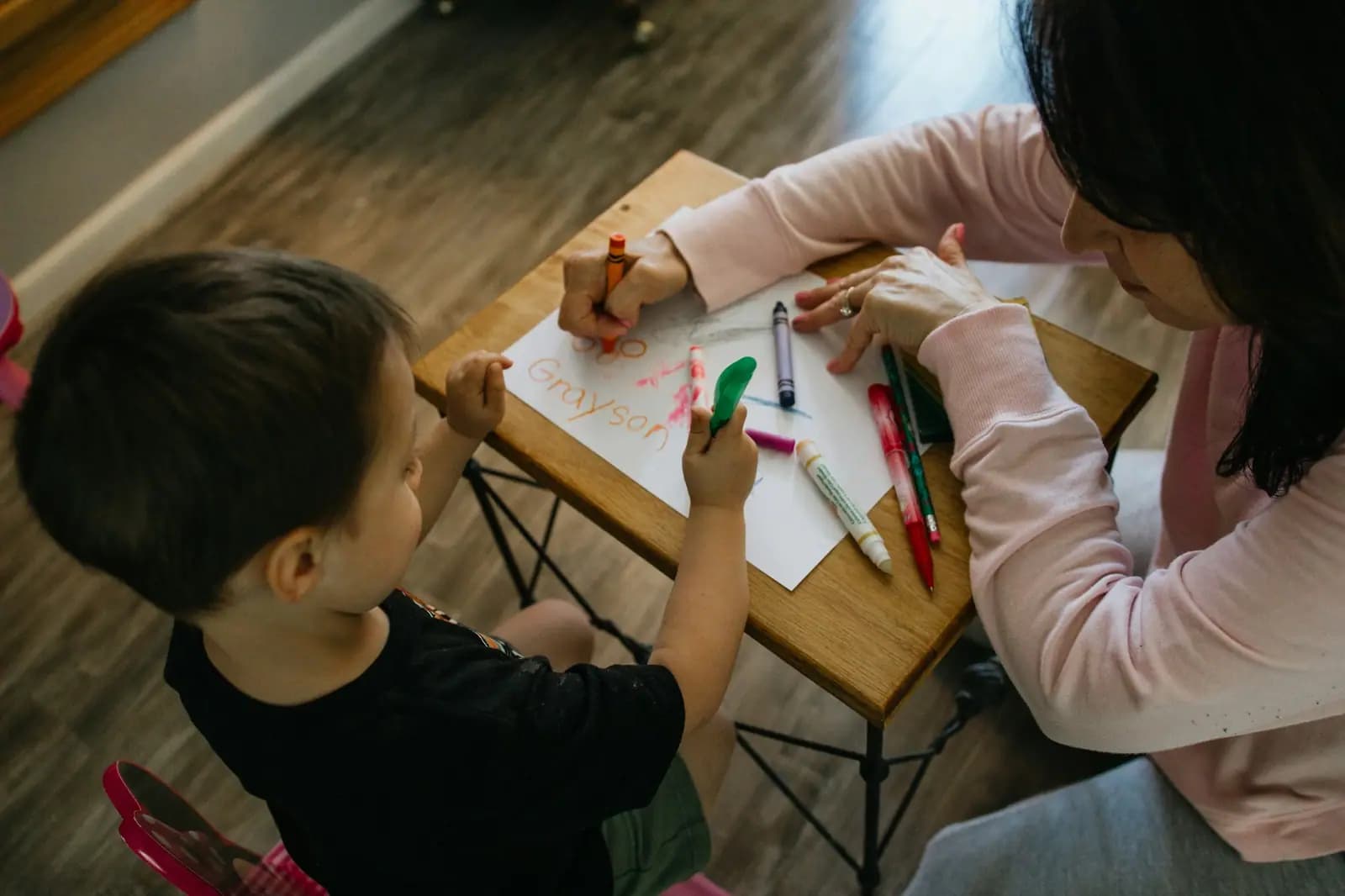
Sessions vary with the child's age and needs, but good ones share a shape. The child knows what is going to happen, the work comes in short blocks, practice happens in real situations as well as at the table, and the session ends predictably. A typical afternoon session might run like this.
- A settled start: the same greeting, the same place, a snack and a few minutes to arrive after school.
- The visual schedule for the session, looked at together and ticked off as each part is done.
- Focused work on one or two targets, in short blocks with movement in between.
- Practice inside a real routine: asking for a snack, packing the school bag, laying the table, or a walk to the shop downstairs with a short list, where the family has agreed to outings.
- Something the child has chosen, earned and predictable.
- A clear ending, a few minutes with the parent, and the record written before the special educator leaves.
The record matters as much as the session. A few lines each time, on paper or in a shared file: the target, what the child did, what was new, and anything the parent should try. It is what allows anyone, including a parent who was at work, to see whether the weeks are adding up.
Where do the targets come from?
Targets should not be invented at the dining table. They come from the school's plan or IEP, the speech-language pathologist's current goals, the occupational therapist's plan, any plan from a psychologist or behaviour analyst, and the family's own priorities, such as eating with the family or getting dressed without a struggle before the school bus. The special educator's job is to turn these into a small number of targets for home, usually three to five at a time, each written plainly enough to check.
A plain target reads like 'asks for help with a three-word sentence at snack time, without a prompt', not 'improve communication'. Where the target belongs to a clinician, the special educator carries it, practises it in ordinary moments and reports back; they do not change it. Carrying the speech-language pathologist's targets into the day shows how that works for communication goals.
How do families usually arrange the hours?
Most families arrange several afternoons a week, at fixed times, with the same special educator. Consistency matters more than length: the same days and the same start time let the child predict the session and let the household plan around it. Sessions should be long enough for real work and short enough to end before the child is exhausted, and they usually go better after a snack and some movement than straight off the school bus.
Look at the whole week before adding sessions. A child who has school, two therapy appointments and tuition classes has little left for a special educator, and something may need to give. Some families ask the shadow teacher to continue into the afternoon, so that one person carries the same plan in both places; others keep a lighter programme going through the summer holidays so that routines do not unravel. Write the days, times and holiday arrangement into the terms, and review them after the first month.
Is it working? What to check after a month
A month is too short for large changes and long enough to know whether the approach is right. Sit down with the special educator and the record, and check the following.
- You can name two or three things your child now does, or does with less help, that they could not do a month ago.
- The record shows the same targets week after week, with notes on what changed.
- Sessions start more easily than they did in the first week.
- The special educator has spoken to the school or a therapist at least once, with your consent.
- At least one other adult at home can use one of the strategies.
- You have been told plainly what is not moving and what will change.
If most of these are true, the plan is working even if progress feels slow. If few are, ask for a review: the targets, the method or the fit may need to change. Not every target moves in a month, but a special educator should always be able to say why one has not.
Working with the therapists and the school
A special educator is most useful when they are connected to everyone else around the child. With the family's written consent they share the record with the speech-language pathologist and occupational therapist before sessions, ask what to practise next, and sometimes attend a session where the clinician agrees. They read the school's IEP and speak to the class teacher or the shadow teacher, so that the words, the rewards and the schedule at home match those at school.
They do not diagnose, write therapy programmes, deliver speech, occupational or behaviour therapy, or advise on medication. If a special educator starts offering views on any of these, they have stepped outside the role. The line is simple: clinicians set the clinical goals, the school sets the school's plan, and the special educator carries both into the home and reports on what happened.
Briefing the household
Afternoons at home involve more people than the child and the special educator: grandparents, whoever helps in the home, older siblings, a driver, relatives who drop in. Each of them can undo a strategy without meaning to, by finishing the child's sentence, doing up the shoes to save time, or switching on the television in the middle of the session. The special educator should brief them, with a parent present and in the household's languages, on the two or three things that matter most.
Protect the session itself: a room or corner without the television, visitors kept away for that time, siblings given something of their own to do. Agree the household rules that apply to everyone who works with the child: no physical punishment, no photographs shared outside the family, no food or medicine given without the parents' agreement. One consistent plan across the household covers the briefing in detail.
Warning signs
Most problems with a home placement show within the first few weeks, if the family knows what to look for. These are the signs that the sessions are not doing what they should.
- Endless worksheets, colouring and copying, with the same kind of sheet every day.
- No written targets, or targets that never change.
- No record, or a record that says 'good session' and nothing else.
- Homework done for the child, or answers supplied so that it is finished quickly.
- Phone use during sessions, late starts and early finishes.
- Opinions on diagnosis or medication, or promises of a cure.
- Reluctance to speak to the school or the therapists.
- A child who dreads every session, week after week.
Raise a concern early and directly, with the record in front of you, and give the special educator the chance to change. If the pattern continues, it is a placement problem rather than a child problem, and the fair thing for everyone is to find a better fit. Anything that suggests your child is frightened of the special educator is different: raise it the same day.
How to hire a special educator at home
Start with a one-page brief: your child's age and school, the clinicians' reports, the school's plan, the hardest part of the afternoon, the languages spoken at home, and the days and times you want. Then look for documented experience with your child's particular need, a qualification confirmed with the institution that issued it, references you have actually spoken to, and a scenario interview about your child's real afternoons. How to verify a special educator's qualifications sets out each check.
Run a short paid trial before committing, and put the terms in writing: days, hours, holidays, what the special educator will and will not do, how progress will be reported, and how the arrangement ends if it must. Special Minds introduces special educators for sessions at home in Mumbai, Delhi NCR, Bengaluru, Hyderabad, Chennai, Kolkata, Pune and Ahmedabad, with qualifications verified, references spoken to and two interviews behind every candidate, and reviews each placement at one week, thirty days and ninety days.
Questions
What is the difference between a special educator and a home tutor?+
A home tutor's job is the syllabus: this week's chapters, worksheets and tests. A special educator's job is the child's underlying skills, such as attention, communication, organisation and independence, taught to targets agreed with the school and therapists. Many children with additional needs benefit more from the second, or from both with clearly separate roles.
Should a parent sit in on the sessions?+
In the first weeks, often yes, for part of each session, so the parent learns the strategies and the child sees the adults working together. Later it usually helps to step out so the child works with the special educator alone, with a short handover at the end instead.
Can a special educator at home help with school homework?+
Yes, by building a homework routine the child can learn to run: a set time, one task at a time, and steps the child can tick off. They should not do the homework for the child. If the homework is regularly beyond the child, that is something to raise with the school.
Is a special educator useful before a child starts school?+
Often, for a young child with a developmental delay or autism. The work is woven into daily care, such as play, meals, dressing and books, with language and routines built in. The special educator works alongside the parent and follows the plans of the developmental paediatrician and therapists rather than running separate lessons.
Do sessions continue during the school holidays?+
They can, and many families find it worthwhile, because routines and skills tend to slip when the school day disappears. A holiday programme is usually lighter and more practical, with cooking, shopping and self-care alongside a little academic work. Agree the arrangement in writing at the start.
What qualifications should a special education teacher at home have?+
Look for a diploma or degree in special education, checked directly with the college or body that awarded it rather than taken from a scanned certificate. Experience with children whose needs are like your child's counts as much, and so do references you have spoken to yourself.
Special Minds introduces and supports educational and care professionals. Nothing here is medical, psychological or legal advice, and the terms of any placement are set out in your written agreement, which you should have reviewed by your own adviser. Rules set by schools, boards and government bodies change; confirm the current version with the body concerned.
Read next
Keep reading

Autism
Autism support at home between therapy sessions: what a special educator actually does
4 min read
Hiring
Shadow teacher, special educator or remedial teacher: which does your child need?
4 min read
Vetting
How to verify a special educator's qualifications and references before they meet your child
4 min read

Hiring
How to hire a shadow teacher in India: a step-by-step guide for families
5 min read
Talk it through with a specialist
A private conversation about your child, in English or Hindi. No fee, no obligation.