Learning disabilities
Class 3 and still not reading fluently: when practice is not enough, and what to do next
When a child cannot read fluently in class 3, more practice is rarely enough. What to rule out, what the school can do this term and when to seek assessment.
In this post
- 01Why does class 3 feel like a wall?
- 02What does not reading fluently look like in an Indian classroom?
- 03What should we rule out first?
- 04What can the school do this term?
- 05When should we seek an assessment?
- 06What you see, what it may mean, and the next step
- 07What does structured remedial teaching look like?
- 08What can parents do at home in 15 minutes a day?
- 09What should we avoid?
If your child cannot read fluently in class 3, more of the same practice is rarely the answer. The first steps are to rule out vision, hearing and language gaps, ask the school what it sees, and seek an assessment if the difficulty has lasted through a year of good teaching. Class 3 is the year many Indian schools stop teaching reading and start expecting it, so a gap that was easy to overlook in class 1 begins to affect every subject. This guide explains what to check, what to ask for this term and what helps at home.
Why does class 3 feel like a wall?
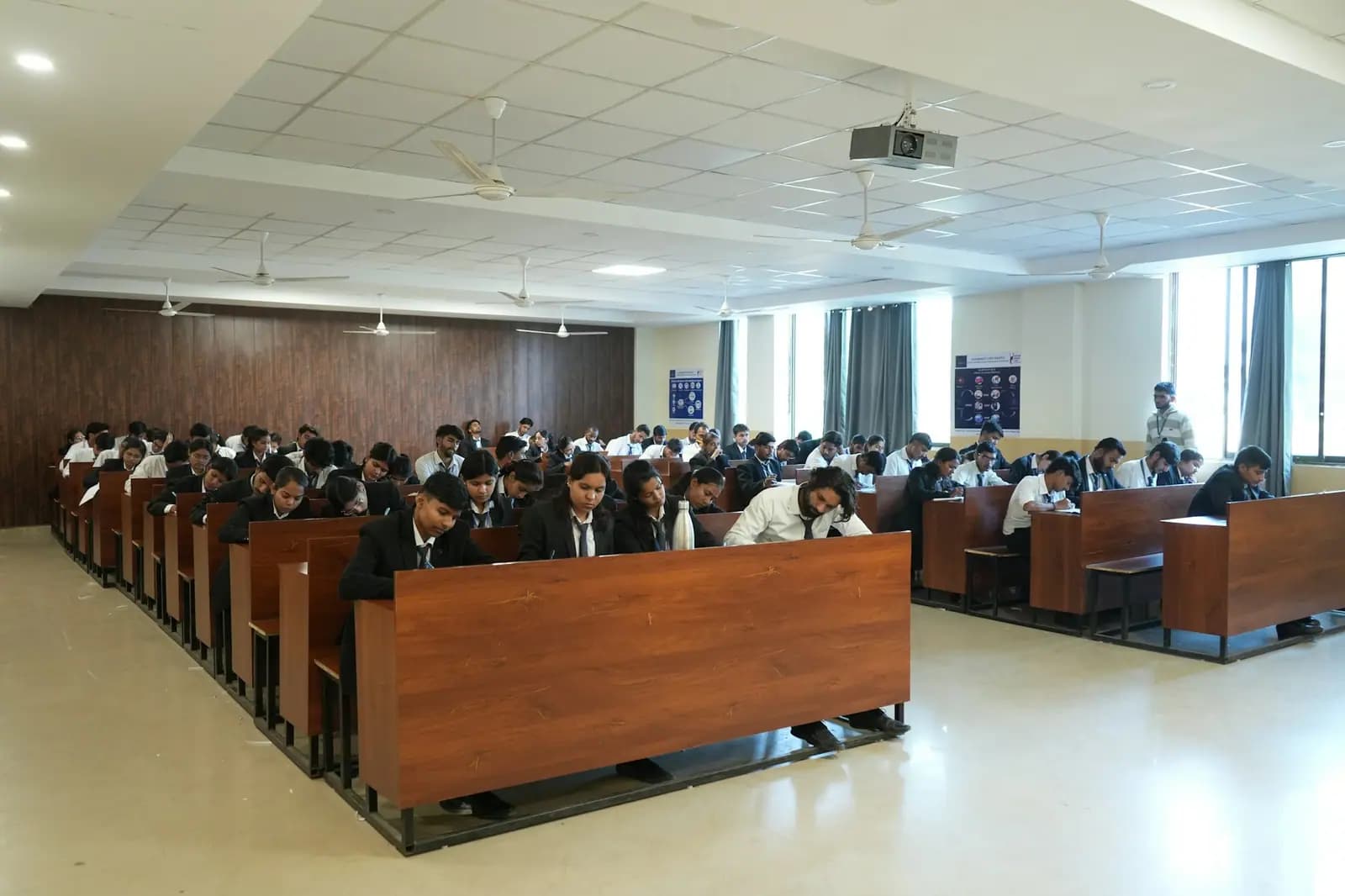
In the first two years of primary school, reading is a subject. Children practise letters, sounds, short words and simple sentences, and teachers expect mistakes. The Indian Academy of Pediatrics (IAP) expects children to have learned to read by about class 2. From class 3, reading quietly becomes the way every other subject is taught. EVS chapters get longer, maths has word problems, and the English and Hindi textbooks move from short rhymes to passages with questions at the end.
A child who reads slowly and with effort now meets reading everywhere, all day. They spend so much energy working out the words that little is left for the meaning, and they fall behind in subjects they understand perfectly well when someone explains them aloud. This is why many families first notice a problem in class 3, even though the difficulty was probably there earlier.
The shift is also emotional. By eight or nine, children know exactly where they stand in a class of forty. A child who is always the last to finish the passage, or who is corrected every time they read aloud, soon starts to believe they are not clever. Catching the difficulty now protects the reading and the child's view of themselves.
What does not reading fluently look like in an Indian classroom?
Fluent reading means reading accurately, at a comfortable pace and with enough expression to show understanding. A child who is not yet fluent may still read many words correctly, which is why the problem is easy to miss at home. These are things parents and teachers commonly notice in class 3 that are worth raising with the class teacher.
- Reading word by word in a flat voice, with long pauses before longer words.
- Losing their place, skipping a line or reading the same line twice when it is their turn to read aloud.
- Guessing a word from its first letter or the picture instead of reading it through.
- Copying slowly from the board, so notebooks are incomplete by the end of the period.
- Mistakes with maatras or half letters in Hindi or the state language, as well as with English spellings.
- Understanding a story well when it is read to them, but not when they read it themselves.
- Being exhausted, irritable or suddenly unwell on days with reading tests or dictation.
One or two of these on a bad day means little. A pattern that has lasted months, across English and the other languages the child is taught, is worth writing down with examples. Keep a few pages from the notebooks and the last two report cards; they will help every professional you see.
What should we rule out first?
Before anyone talks about a learning disability, some simpler explanations need to be checked. The IAP treats vision and hearing assessment as a required part of any evaluation for a learning disability, so start there even if the child has had checks before. A child who cannot see the board clearly, or who misses parts of words in a noisy classroom, will look exactly like a child who struggles to read.
- Vision: a full eye test, not a quick school screening, especially if the child squints, rubs their eyes or holds books very close.
- Hearing: a hearing test through the paediatrician, particularly if the child often says what, mishears instructions or had frequent ear infections.
- Language: whether the child understands and speaks English, and the other school languages, well enough to read them. A child who does not know many English words will struggle to read them.
- Missed teaching: long absences, a move between cities or boards, or a school where phonics was never taught directly.
- General health and sleep: a tired child reads badly, and late nights with tuition and homework are common in class 3.
If all of these are fine, or have been sorted out and the reading still does not move, the difficulty is more likely to be in how the child learns to read. That is the point to think about an assessment.
What can the school do this term?
You do not need a report to ask the school for help. Ask for a short meeting with the class teacher and, if the school has one, the special educator or counsellor. Bring your notes and examples, and ask what the teacher sees rather than opening with what you want. Teachers with classes of 35 to 45 often know exactly which children are struggling and have had no one to tell. Preparing for a school meeting about your child sets out how to run that conversation.
Then ask for specific, small changes that can start this term.
- Small-group or one-to-one reading with the special educator or in the resource room, if the school offers it.
- Not being asked to read aloud in front of the class without warning; a practised passage is fine.
- Printed notes or photos of the board, so the child is not judged on copying speed.
- Questions in class tests read aloud to the child, so that science and EVS marks show what they know.
- A weekly line in the school diary on how reading went, so home and school are working on the same thing.
- A review meeting after six to eight weeks to see what has changed.
Some schools will want a report before they change anything. If so, ask what the school can do in the meantime, and note the answer. A child who is waiting for an appointment should not also be waiting for help.
When should we seek an assessment?
The IAP says a learning disability can only be diagnosed once formal schooling has started, and it recommends that paediatricians screen children at about seven, two or three years after they start school. Published commentaries on India's 2024 disability-assessment guidelines describe teachers screening children at eight or in class 3. So class 3 is not too early; it is when the system itself expects to look.
Seek an assessment if the reading difficulty has lasted through a year of good teaching, if it shows up in every language the child is taught, or if the gap between what your child understands when listening and what they can read keeps widening. Start with the paediatrician, who can refer you to a clinical psychologist or a hospital team. Getting a learning disability assessment in India explains who does it, what happens on the day and what to bring.
The IAP's message to families is plain: do not wait for children to fail. It also notes that holding a child back a year does not improve their performance. If someone suggests giving it until class 4, ask what will be different by then. The guide to the signs of dyslexia in children describes the patterns clinicians will ask you about.
What you see, what it may mean, and the next step
This table is not a way to diagnose your child. It is a way to decide which question to ask next, and whom to ask.
| What you see | What it may mean | Next step |
|---|---|---|
| Squints, loses place, complains of headaches after reading | A vision problem | A full eye test before anything else |
| Mishears words, asks for repetition, struggles in noisy rooms | A hearing problem | Ask the paediatrician for a hearing test |
| Reads English slowly but reads the home language well | An English vocabulary gap | More spoken English and read-alouds, and a term of good phonics teaching |
| Struggles in every language, confuses sounds and letters | A possible specific learning difficulty | Paediatrician and a referral for assessment |
| Reads accurately but very slowly, and tires quickly | Reading not yet automatic | Daily short re-reading practice, and a check with the school |
| Reads well at home but freezes in class | Anxiety about reading aloud | Ask the teacher to stop surprise reading aloud |
| Changed school or board recently, missed months | Missed teaching | Structured catch-up, then review after a term |
Many children fit more than one row. A child learning English as a second language can also have dyslexia, and a child with a learning difficulty can become anxious about reading. The guide on a second-language learner or dyslexia looks at that overlap in detail.
What does structured remedial teaching look like?
When reading is slow to develop, the help that works best is structured teaching: the sounds of the language, how they are written and how words are built are taught directly, in a planned order, with each step practised until it is secure. It is different from tuition, which covers this week's chapter again. Structured literacy and multisensory teaching describes what a good lesson looks like minute by minute.
A remedial teacher should begin by finding out exactly where your child's reading breaks down: sounds, blending, particular letter patterns, speed or meaning. They should set a few written targets, teach in short regular sessions, use reading material at your child's level rather than the class textbook, and measure progress every few weeks. You should be able to see the starting point and how far the child has moved.
Sessions can happen at home or online, and many families arrange them on two or three weekday afternoons alongside school. A remedial teacher at home can also see handwriting and copying, which often trouble the same children.
What can parents do at home in 15 minutes a day?
Home practice helps most when it is short, calm and successful. Fifteen minutes on most days does more than an hour on Sunday. Choose a regular time when the child is not hungry or exhausted, perhaps after the tiffin box is unpacked and before tuition or play, and keep the television off.
- Five minutes of you reading aloud from a book your child enjoys but cannot yet read alone, in any language the family reads.
- Five minutes of your child reading a short text at their own level, ideally one the teacher has sent, not the class textbook.
- Read the same short passage two or three times across the week, so the child hears themselves get faster and smoother.
- Try paired reading: read a sentence together, and let the child continue alone when they are ready, joining in again if they stall.
- When they meet a hard word, ask them to sound it out rather than guess, and tell them the word if they are still stuck after a few seconds.
- Finish with a quick chat about what happened in the text, not a test.
Stop while it is still going well. If your child cries, refuses or becomes very tired every time, that is useful information for the teacher and the paediatrician, not a reason to push harder.
What should we avoid?
The most common response in Indian families is to add tuition. For a child whose reading has not become fluent, more tuition usually means more reading that is too hard, delivered faster, before a test. It fills the evening and leaves the underlying skill untouched. Punishment, loss of play or extra writing work as a consequence of poor reading do the same damage, and add fear.
Comparison is the other trap. A cousin who reads well at seven, an elder sibling who never needed help, or a grandparent who asks the child to read the newspaper aloud at a family gathering can each teach a child that reading is where they fail in public. Ask relatives to read to the child instead, and keep reading practice private.
Special Minds does not assess or diagnose children. It introduces vetted remedial tutors at home in eight cities and online anywhere in India, who work from the assessment and stay in touch with the school. The learning disability support page explains how that works.
Questions
At what age should a child read fluently?+
The Indian Academy of Pediatrics expects children to have learned to read by about class 2. Fluency keeps growing after that, but a child who is still reading word by word in class 3, despite steady teaching, should be discussed with the class teacher and the paediatrician.
My child reads slowly in class 3. Is it dyslexia?+
Not necessarily. Slow reading can come from a vision or hearing problem, a gap in the language of instruction, missed teaching or anxiety. Only a qualified professional can say whether it is dyslexia, after those simpler causes have been checked.
Will more tuition help my child read better?+
Usually not on its own. Tuition covers the syllabus again, while a child who is not reading fluently needs the reading skill itself taught step by step. Structured remedial teaching and short daily practice at the child's level tend to help more.
Should my child repeat class 3 if they cannot read well?+
The Indian Academy of Pediatrics notes that the evidence shows holding a child back a year does not improve performance. Finding out why reading is hard and starting the right teaching is more useful than repeating the same year.
Can a child read well in Hindi but not in English?+
Yes. Indian scripts and English work differently, and a child may also know far fewer English words. A child who reads the home language well but not English may simply need more English. Difficulty in every language is a stronger reason to seek an assessment.
How long does it take for reading to improve with remedial teaching?+
There is no single answer. It depends on where the difficulty lies, how often teaching happens and how early it starts. A good remedial teacher measures a starting point and shows progress every few weeks, so you can see whether the plan is working.
Special Minds introduces and supports educational and care professionals. Nothing here is medical, psychological or legal advice, and the terms of any placement are set out in your written agreement, which you should have reviewed by your own adviser. Rules set by schools, boards and government bodies change; confirm the current version with the body concerned.
Read next
Keep reading

Learning disabilities
Signs of dyslexia in children: what to notice and what to do next
11 min read
Learning disabilities
Dyslexia test in India: how the assessment works and how to read the report
11 min read
Learning disabilities
What is remedial teaching? How it differs from tuition, and how to tell it is working
9 min read
Learning disabilities
Learning disability and board exam accommodations: how to prepare from class nine
4 min read
Talk it through with a specialist
A private conversation about your child, in English or Hindi. No fee, no obligation.