School
How to explain autism to classmates, with or without naming the diagnosis
How to explain autism to classmates: consent first, what to say at each age, a short script for the class teacher, buddy systems, and dealing with teasing.

In this post
- 01Why classmates matter
- 02Consent first: whose story is it?
- 03What to say at each age
- 04A sample script for the class teacher
- 05Involving your child, if they want to be
- 06Buddy systems that work
- 07Answering questions from other parents
- 08Noticing and responding to teasing and bullying
- 09What does the shadow teacher do at playtime?
The best way to explain autism to classmates is usually a short, concrete conversation led by the class teacher: what the child finds hard, what helps, and what classmates can do, often without naming a diagnosis at all. Children are more often curious than unkind, and a class that is given an explanation is less likely to invent its own. This guide covers consent, what to say at each age, a sample script, buddy systems, other parents' questions, teasing, and what the shadow teacher does at playtime.
Why classmates matter
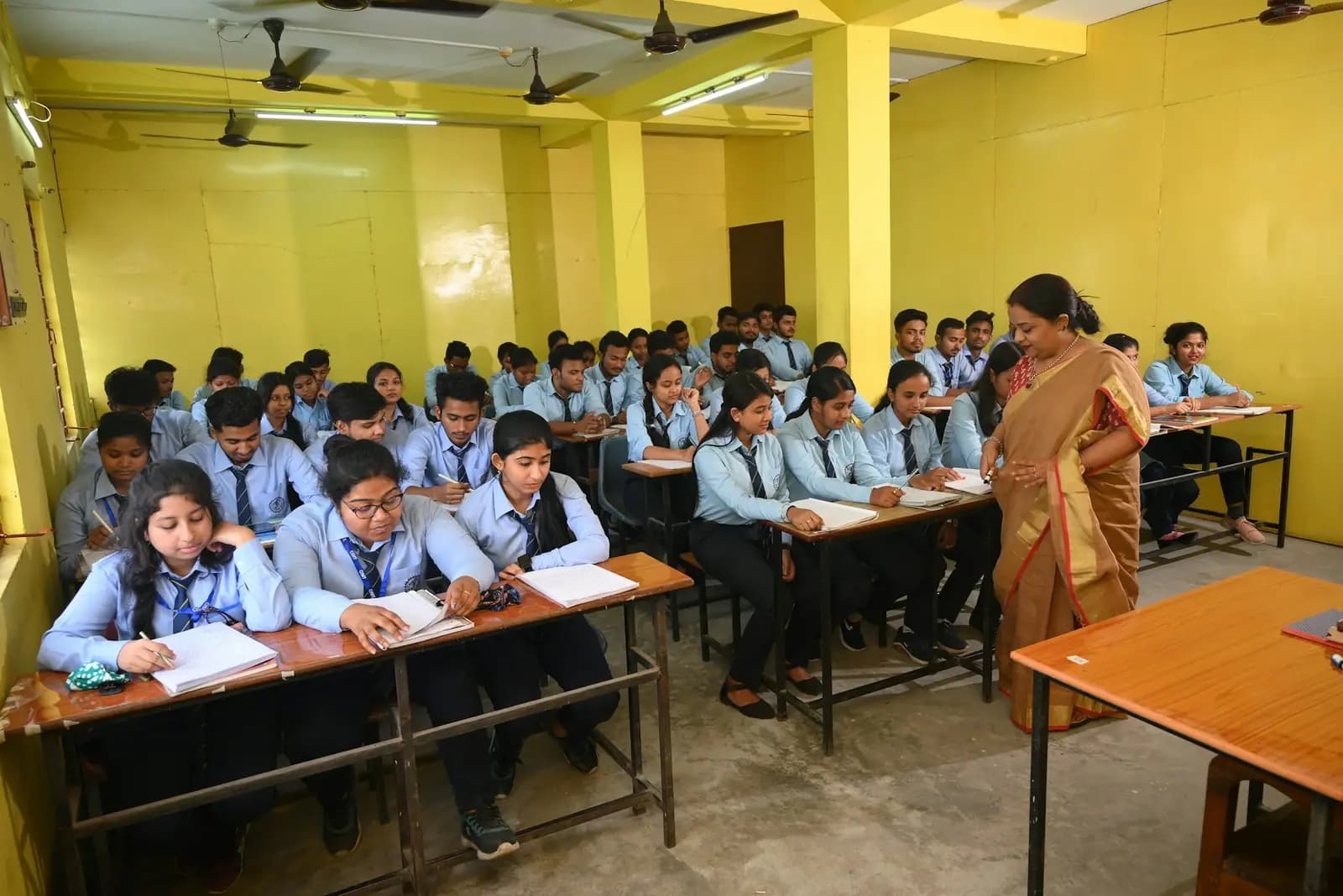
School is where most friendships happen, and for an autistic child, or a child with ADHD, Down syndrome or a speech delay, friendships rarely happen by accident. In a class of forty, the other children notice everything: the headphones in assembly, the adult beside one desk, the flapping, the answers called out, the tiffin eaten alone. If nobody explains, they explain it themselves, usually with words like baby, mad or naughty.
A short, honest explanation changes what classmates do. Children who know that a classmate finds noise painful stop banging desks nearby; children who know why a classmate does not answer straight away learn to wait. The aim is not sympathy. It is ordinary inclusion: being picked for the team, invited to the birthday party, and left alone when that is what is needed.
Consent first: whose story is it?
A diagnosis is personal information, and it belongs to the child and the family. Before anything is said to the class, the family decides whether the diagnosis will be named, and the school should not name it without written consent. Many families choose not to. The class needs to understand what helps, not the medical word, and a label said aloud in a classroom travels quickly to homes, WhatsApp groups and the school van.
The child's view counts as much as the family's, and more with each year. A five-year-old will not have a view about disclosure; a ten-year-old might, and a thirteen-year-old certainly will. Some older children want classmates to know the word, because it explains them; others would be mortified. Both are reasonable, and the choice can be revisited as the child grows. Telling the school about your child's diagnosis covers the earlier decision about what the staff are told.
What to say at each age
Keep it short, concrete and about the classroom. At every age, children respond better to what they can see and do than to a description of a condition.
| Stage | What classmates notice | What helps |
|---|---|---|
| Pre-primary (nursery to UKG) | Crying, not joining circle time, an extra adult in the room | Simple facts in circle time, a picture book about differences, adults showing how to play together |
| Primary (classes 1 to 5) | Different rules, headphones, not answering, calling out | A short talk from the class teacher on what helps and how to be a friend, then questions |
| Middle school (classes 6 to 8) | Anything that looks like special treatment, and social mistakes | An explanation of fairness, the child's own voice if they want it, and clear rules on teasing |
In the older classes, prepare for the word fair. Children of eleven and twelve notice anything that looks like special treatment. Explain that fair means everyone gets what they need to learn, as with spectacles or a seat near the board, not that everyone gets the same thing.
A sample script for the class teacher
This script is for a primary class. It names no diagnosis and takes about five minutes. Replace the details with what is true of your child, agree the final words with the family, and choose a calm day.
- 'Everyone in this class is good at some things and finds other things hard. Some of us need spectacles to see the board. Some of us need quiet to think.'
- '[Name] is very good at [puzzles, drawing, train routes]. [Name] finds some things hard that may be easy for you, like loud noise or lots of people talking at once.'
- 'When it gets too loud, [Name] might cover their ears or go to the quiet corner. That is how [Name] calms down. It is not rude, and nobody is in trouble.'
- '[Adult's name] is in our class to help [Name] with some things, the way I help all of you. You can say hello to them too.'
- 'You can be a good classmate by saying hello, asking [Name] to play, giving a little extra time to answer, and never copying or laughing at the way [Name] does things.'
- 'If you see anyone being unkind to [Name], or to anyone else, tell me or [Adult's name]. That is not telling tales. That is looking after each other.'
- 'Does anyone have a question?' Answer simply and truthfully, and if you do not know, say you will find out.
For a week afterwards, the teacher should watch for classmates including the child and say something approving when they do. What is praised is repeated. A social story can help the child understand what the class was told.
Involving your child, if they want to be
Some children want to be part of the explanation, and it can be the most powerful version of it. An older child might show classmates what their headphones are for, or share a page about what they enjoy, what is hard and what helps. A younger child might stay for the part about what they are good at. Others want to be well away when it happens, and that is equally fine.
Prepare the child with the family and, where there is one, the shadow teacher: what will be said, who will say it, what the child may add, and how they can leave. Never make taking part a condition, or make the child answer questions they did not choose to answer. If an autistic teenager wants to explain autism to the class in their own words, the adults' job is to make space and keep the room kind.
Buddy systems that work
Buddy arrangements need organising. The first volunteer is usually the kindest child in the class, and by the third week they are tired, their own friends have drifted, and the arrangement has become a duty. A structured system spreads the role, gives it a purpose and supports the buddies.
- Rotate buddies every week or two, so that several children get to know the child and nobody carries it alone.
- Give each buddy a clear job: walking to the computer lab together, sharing a table at lunch, partnering in PT.
- Brief buddies in a few sentences on what helps, and tell them whom to go to if something goes wrong.
- Build on shared interests: a child who loves trains may find a friend in another child who loves trains.
- Check in with the buddies, not only with the child, and thank them.
- When a friendship grows out of the system, let it be ordinary and stop managing it.
The shadow teacher can set the system up with the class teacher, but it works best when it belongs to the class rather than to the adult beside the child.
Answering questions from other parents
Other parents will ask, usually out of curiosity and sometimes out of worry about their own child. Decide in advance what you are comfortable saying and keep it to a sentence or two: 'She finds noise and change hard, and she has some help in class. She loves cricket scores, so ask her about them.' You owe nobody a diagnosis, and a friendly, brief answer closes most conversations better than silence.
If a parent complains to the school, perhaps after an incident or a rumour in the class WhatsApp group, the school should respond without discussing your child, and should tell you that a complaint was made. Ask the coordinator in advance how such complaints are handled. A school that tells a complaining parent it does not discuss other children, and is dealing with the matter, is doing its job.
Noticing and responding to teasing and bullying
Children with additional needs are easy targets for teasing and often less able to report it, because they may not recognise it or have the words for it. Watch for signs at home: reluctance to go to school, a tiffin that comes back untouched, lost belongings, new words the child repeats, stomach aches on Monday mornings, a sudden change in mood. Much of it happens in corridors, toilets, the van and the playground, away from the teacher's desk.
When you suspect teasing, act the same week. Tell the class teacher and the inclusion coordinator, then follow up in writing. Keep a simple record each time: the date, what happened, who was involved, what your child said and whom you told. Ask for the school's anti-bullying policy. If the teasing continues, ask for a meeting with the coordinator and the principal and bring the record. Do not confront the other child or their parents yourself; it rarely helps your child.
What does the shadow teacher do at playtime?
Less than families expect, and on purpose. At playtime the shadow teacher's job is to make room for other children to come forward, which they will not do while an adult stands at the child's elbow. They stay close enough to see and far enough not to be part of the game. They might set up a game at the start of break, teach the child its rules beforehand, or give a classmate a simple role, then move away.
They also watch. They are often the only adult who sees what happens in the corridor and the playground, and a good one notices early teasing, steps in calmly and records it in the daily note. Over the year, the distance grows; when should a shadow teacher step back? explains how that is planned. Special Minds interviews every shadow teacher it introduces on the needs of children like yours, and reviews each placement at one week, thirty days and ninety days.
Questions
Should classmates be told that my child is autistic?+
Only if the family, and the child once old enough, want the word used. Many classes do well with an explanation of what the child finds hard and how to help, with no label at all. If your child wants classmates to know, a teacher can use the word simply and positively, and answer questions honestly.
At what age can children understand a classmate's differences?+
Children notice differences very young, and even in nursery they can take in simple facts: this friend finds noise loud, this friend likes to play trains. By primary school they can follow a short explanation and a few rules for helping. In the older classes, fairness becomes the question to answer.
What are good inclusive classroom activities?+
Activities that give every child a real role: group work with assigned jobs, partner reading, games with clear rules, and projects that draw on different strengths such as drawing, building or remembering facts. Circle time in pre-primary and a short class meeting in primary give children practice in listening, waiting and taking turns.
My child is being teased at school. What should I do first?+
Write down what your child told you, with the date, and speak to the class teacher and the coordinator within the week. Ask what the school will do and when you will hear back, and confirm it by email. Tell your child that telling you was right, and listen without questioning them over and over.
Another parent asked what is wrong with my child. What do I say?+
Nothing is wrong, and you can say so. A sentence about what your child finds hard, what helps and something they love is enough, and it satisfies curiosity without handing over a diagnosis. If the question is hostile, say that the school is aware and supporting your child, and end the conversation there.
Can the shadow teacher explain my child to the class?+
Only with the agreement of the family and the school. It usually works better when the class teacher leads, because the class teacher speaks with the authority of the classroom, while the shadow teacher stands alongside and answers practical questions about how they help.
Special Minds introduces and supports educational and care professionals. Nothing here is medical, psychological or legal advice, and the terms of any placement are set out in your written agreement, which you should have reviewed by your own adviser. Rules set by schools, boards and government bodies change; confirm the current version with the body concerned.
Read next
Keep reading

School
Telling the school about an autism, ADHD or dyslexia diagnosis: when and how
10 min read
School
A school day with a shadow teacher: the daily routine from gate to dispersal
11 min read

Autism
Autism meltdowns at school: what helps before, during and after
11 min read
School
What a school inclusion coordinator needs from a family, and what to ask for in return
4 min read
Talk it through with a specialist
A private conversation about your child, in English or Hindi. No fee, no obligation.