ABA
Home-based, centre-based or school-based ABA: which setting suits your child?
Home based ABA therapy, a centre or school? The trade-offs for Indian families, from commutes and flat space to joint families, and how to choose with a BCBA.
In this post
- 01Does the setting change how ABA works?
- 02Home-based ABA: what it offers, and what it asks of the household
- 03Centre-based ABA: what it offers, and what it costs in time
- 04School-based ABA: what it offers, and why the school must agree
- 05Home, centre or school: the trade-offs side by side
- 06Indian realities that tip the balance
- 07How do you choose, and when should the setting change?
- 08ABA with Special Minds
There is no single best setting for ABA therapy: home-based ABA suits goals that belong at home and children who find new places hard, a centre suits goals that need particular materials or other children, and school-based ABA suits children whose hardest hours are in the classroom. Many children do best with a mix, chosen with the behaviour analyst and changed as goals change. This guide sets out what each setting offers, the trade-offs side by side, the Indian realities that tip the balance, from the evening commute to a two-bedroom flat shared with grandparents, and how to decide.
Does the setting change how ABA works?
The core of a good programme does not change with the address. A Board Certified Behavior Analyst assesses your child's skills, writes measurable goals with you, designs the teaching, supervises the therapist and reviews progress against data you can see. That is the same whether sessions happen on your living-room floor, in a centre room or beside your child's desk at school.
What the setting changes is everything around the teaching: which skills are easiest to practise, who else is in the room, how much travel the week holds, and how easily a skill learned in one place shows up in another. Behaviour analysts call that last part generalisation, and it is the main reason the choice matters. A child who learns to ask for help at a quiet centre table may not yet ask for help with a stuck tiffin box in a noisy classroom. Every setting is good at some things and needs deliberate planning for others.
Some things should hold wherever sessions happen: teaching that feels like play for young children, a child who is broadly willing to take part, harmless stimming left alone, and parents able to see what goes on. Those are worth asking about whichever setting you choose.
Home-based ABA: what it offers, and what it asks of the household
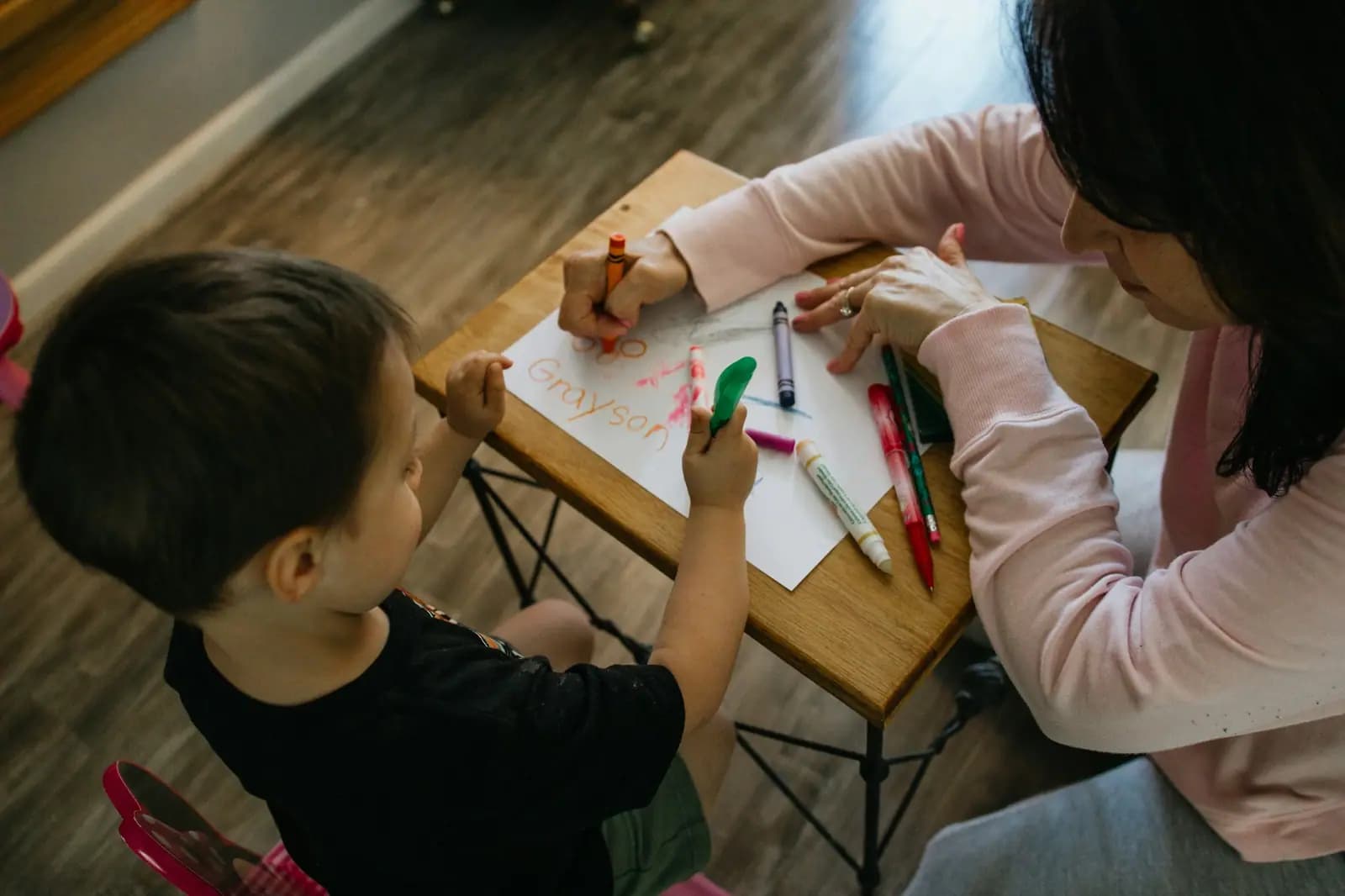
Home-based ABA teaches skills where many of them are needed. Brushing teeth is taught at your own basin, eating at your own dining table, putting on shoes at the rack by the door, playing with the sibling who actually lives there. There is no commute, which matters a great deal for a young child or a child whose day already includes school, a van ride and other therapies. Parents, grandparents and helpers can watch, learn and practise between sessions, so coaching is woven into ordinary life rather than added on.
It also asks things of you. The therapist needs a corner that can be kept reasonably calm for parts of the session, which in a small flat may mean changing when the television goes on rather than finding a spare room. Doorbells, deliveries, guests, the cook arriving and a younger sibling who wants to join in are all part of home life. Some interruptions are useful practice, but constant ones make teaching hard. Someone usually needs to be at home, and the adults in the house need to follow the plan.
- Home often suits: toddlers and young children, children who find new places overwhelming, and goals such as eating, toileting, dressing, sleep routines and coping with visitors.
- Home can be harder when: space is very tight, the household is rarely calm, or the main difficulties happen at school rather than at home.
Centre-based ABA: what it offers, and what it costs in time
A centre gives the session a room designed for learning: materials to hand, fewer distractions than a busy home, and, at some centres, other children with whom group and social skills can be practised in a planned way. For some children a separate place helps them settle into a learning routine.
The cost is mostly time and travel. In Mumbai, Bengaluru, Delhi NCR or any city where an after-school drive can stretch, a centre visit can mean a long round trip for a child who is already tired, and the monsoon makes some weeks harder still. Skills learned in a centre also need a plan to travel home and to school with the child. Ask whether you can observe sessions, how the centre will help you practise the same skills at home, and how often the supervising analyst sees your child in person.
School-based ABA: what it offers, and why the school must agree
School-based ABA brings support to the hours many children find hardest: assembly, moving between periods, the tiffin break, recess, group work and the noise of a full classroom. Teaching a skill where it is needed removes one generalisation step altogether, and the class teacher can see for themselves what works.
It only happens with the school's agreement. Whether the school is CBSE, ICSE, IB or a state board, it sets its own rules for any outside professional in its building, usually through the principal or the inclusion coordinator. A good school-based plan is written to fit the school's timetable and teaching style, says where any one-to-one work will happen, and plans from the start how support will fade.
ABA support at school is not the same as a shadow teacher, who is an educator following the analyst's plan through the day rather than a therapist. The guide to shadow teachers and ABA explains the difference.
Home, centre or school: the trade-offs side by side
The table is a starting point for the conversation with your child's behaviour analyst, not a verdict. The same child may need a different mix at three and at seven.
| What matters | Home | Centre | School |
|---|---|---|---|
| Where skills are learned | In the family's real routines and rooms | In a room set up for teaching | In the classroom, corridor and playground |
| Travel for the child | None | Can be long in city traffic, especially after school | None beyond the usual school journey |
| Distractions | Household noise, visitors, siblings, the television | Usually fewer, by design | A full class, bells, assembly and changing periods |
| Other children | Siblings and cousins, if any | Possible in planned group work at some centres | Classmates all day |
| Family involvement | Highest; coaching happens naturally | Depends on observation and practice at home | Mostly through notes, data and meetings |
| Who has to agree | The household | The family and the centre | The school, in writing, before anything starts |
| Often suits | Young children, self-care, family routines | Focused teaching, materials, planned group work | Classroom skills, transitions, recess, group work |
| Watch for | Constant interruptions; mixed messages from different adults | Skills that stay in the centre; tiring commutes | The child being singled out; support that never fades |
Many families combine settings: home sessions for daily-living skills, a centre for focused work or group practice, school support once the school agrees, and online parent coaching to keep everyone using the same strategies. What matters is that one analyst supervises the whole plan, so the settings pull in the same direction.
Indian realities that tip the balance
The practical facts of your week are part of the decision, and a plan that ignores them will not last.
- The commute: a centre that looks close on the map can be far at five in the evening. Count the real round trip, on a weekday, after school.
- The school van: pick-up and drop timings fix the edges of the day. A session squeezed between the van and dinner may find a child too tired to learn.
- Space: a small flat can still work for home sessions if one corner can be cleared and kept calm when needed.
- The joint family: grandparents at home can be a great help with practice, and can also give the child different messages. Home sessions make it easier to bring them into the plan.
- Household help: a helper or nanny who spends long hours with the child is part of the team, and home sessions let them learn the same responses.
- Language: in a bilingual home, ask which language the therapist will use, and how the key words will match what the child hears at home and at school.
- Power cuts and the seasons: summer heat, the monsoon and an inverter that runs only the fans all affect home sessions and travel. Agree a plan for the weeks they do.
- Two working parents: if nobody is at home in the day, ask how coaching will reach the adult who is.
How do you choose, and when should the setting change?
Choose by goals first and logistics second, then check the plan against your real week.
- List the goals you and the analyst have agreed, in plain words.
- Next to each, write where it matters most in real life: home, school, outings or everywhere.
- Map your child's week as it is: school, the van, tuition, other therapies, sleep, meals, play and family time.
- Ask the analyst which setting suits each goal, and why. A clear reason is a good sign; the same answer for every child is not.
- Start with the mix that fits, and agree a date to review it against the data.
Expect the mix to change. Home may suit a three-year-old learning to ask for things; a centre may help when the goals are small-group skills before school starts; school-based support may make sense in the first term of a new class and fade after. Signs that it is time to review include skills not showing up outside the setting where they are taught, a child exhausted by travel, a school newly willing to have support in class, or goals that have simply moved on.
ABA with Special Minds
Special Minds provides ABA therapy designed and supervised by a BCBA at home, at school with the school's agreement, online with parent coaching and at a centre, so the setting can follow your child's goals rather than the other way round. You can ask for the supervising BCBA's name and check the credential on the BACB's public registry. Read more about ABA therapy in India or ABA therapy at home.
Questions
Is home-based ABA therapy as good as a centre?+
Neither is better for every child. Home suits self-care, family routines and children who find new places hard; a centre can suit focused teaching, particular materials or planned work with other children. What matters more is a well-designed plan, a supervising behaviour analyst and progress measured against clear goals, wherever the sessions happen.
Do I need a separate room for ABA therapy at home?+
No. Most home programmes work in a corner of the living room or bedroom that can be kept reasonably calm during parts of the session. Much of the teaching also happens where skills are used, such as the kitchen, the bathroom basin or the front door.
Can my child have ABA therapy at school?+
Yes, if the school agrees. ABA support in school happens at the school's invitation and to its rules, so the family and the analyst speak to the principal or inclusion coordinator first and agree in writing how the support will work.
Can we combine home, centre and school ABA?+
Yes, and many families do. The important thing is that one behaviour analyst supervises the whole programme, so every setting uses the same goals, prompts and responses, and the data comes together in one place.
Should I be allowed to watch my child's ABA sessions?+
You should expect to be able to observe, whether at home, at a centre or through notes and data from school. A provider who will not let parents see sessions is a reason to ask more questions.
What if grandparents or helpers keep interrupting home sessions?+
Talk to the analyst, who can suggest when sessions should be protected and when interruptions are useful practice. Often the best answer is to bring those adults into the plan with a short script.
Special Minds introduces and supports educational and care professionals. Nothing here is medical, psychological or legal advice, and the terms of any placement are set out in your written agreement, which you should have reviewed by your own adviser. Rules set by schools, boards and government bodies change; confirm the current version with the body concerned.
Read next
Keep reading

ABA
Online ABA and parent coaching: can remote supervision work?
10 min read

ABA
Shadow teacher and ABA: carrying the behaviour plan into the classroom
10 min read
ABA
Generalisation in ABA: when skills learned in therapy don't show up at home or school
10 min read
ABA
What is ABA therapy? A plain-English guide for parents in India
11 min read
Talk it through with a specialist
A private conversation about your child, in English or Hindi. No fee, no obligation.