ABA
Pivotal response treatment (PRT): motivation-led ABA explained
Pivotal response treatment (PRT) explained for parents: the pivotal areas, child choice, natural rewards, how parents use it at home, and its limits.
In this post
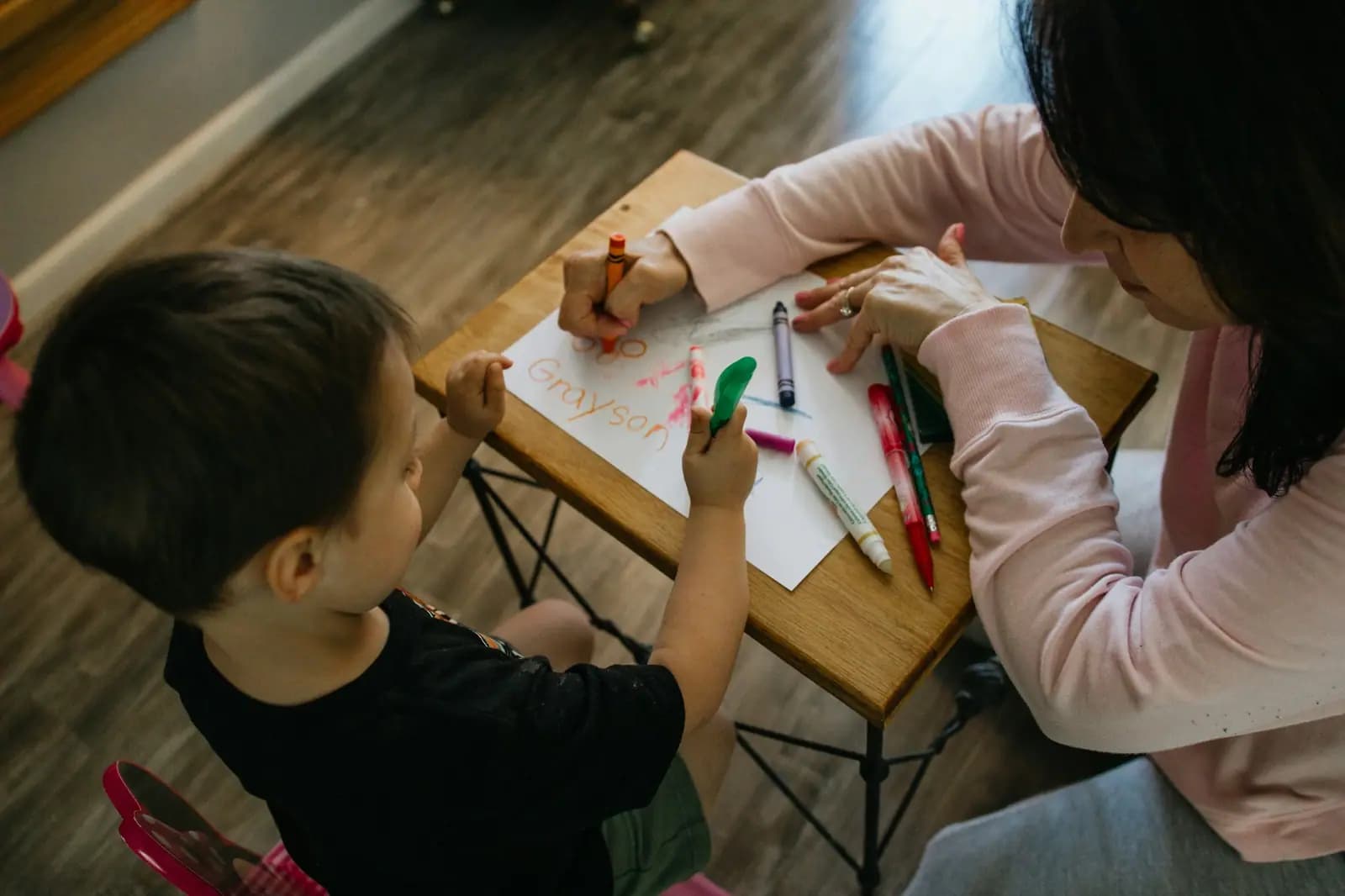
Pivotal response treatment (PRT) is a play-based form of ABA that targets a small number of 'pivotal' skills, especially motivation, on the idea that improving these lifts many other skills at the same time. In practice the child leads: they choose the toy or activity, the adult creates chances to communicate or play within it, and every reasonable attempt earns the natural reward. PRT was developed by the researchers Koegel and Koegel and is designed to be used by parents through the day. This guide explains the pivotal areas, the main techniques, how PRT compares with table-based ABA, how families use it at home, and its limits.
What is pivotal response treatment?
Traditional ABA teaching often happens at a table, one instruction at a time, with rewards that have little to do with the task. PRT grew from a different question: instead of teaching hundreds of separate skills one by one, what if you focused on a few skills that unlock many others? Motivation is the main one. A child who wants to communicate, and finds that trying pays off, starts to practise without being pushed.
PRT belongs to a family of approaches called naturalistic developmental behavioural interventions, or NDBIs. These combine ABA with what developmental science knows about how young children learn: teaching in natural settings, sharing control of the activity between child and adult, and using natural rewards. The Early Start Denver Model is another member of the same family. Families meet PRT sometimes as a named programme and more often as techniques woven into a wider ABA plan.
It is still ABA. Goals are measurable, data is taken, and a behaviour analyst designs and supervises the work. What changes is how it feels to the child: more like play with an attentive adult, less like lessons.
What are the pivotal areas in PRT?
Descriptions of PRT usually name a handful of pivotal areas. Your child's plan will focus on the ones that matter most for them right now.
- Motivation: the child's wish to take part, communicate and keep trying. Everything else in PRT is built around it.
- Responding to more than one cue: noticing several features at once, such as 'the big red ball' rather than just 'ball', which helps a child make sense of a busy world.
- Self-initiation: starting an interaction, such as asking a question, showing something, or inviting someone to play.
- Self-management: noticing and guiding one's own behaviour, often taught to older children, for example keeping track of their own turns in a game.
The labels matter less than the principle behind them: choose skills that make the child more able to learn from everyday life on their own, rather than skills that only work when an adult sets them up.
How does PRT build motivation?
PRT uses a set of techniques that keep the child interested. You will recognise many of them from good play with any young child; the difference is that they are used deliberately and consistently, and the analyst checks that they are working.
| Technique | What it means | What it might look like |
|---|---|---|
| Child choice | The child picks the toy, activity or topic | Your daughter heads for the toy kitchen, so the teaching happens there, not at the table |
| Clear opportunity | The adult has the child's attention and gives a short, clear chance to respond | You hold up the small steel tumbler she wants for her pretend chai, and wait |
| Shared control | The adult takes turns and keeps some materials, so there is a reason to communicate | You keep the sugar pot and hand over a spoonful each time she asks |
| Mixing easy and new tasks | Familiar skills are mixed in with new ones, so the child keeps succeeding | She names the cup she knows well, then tries the new word 'saucer' |
| Rewarding attempts | Clear tries are rewarded, not only perfect answers | 'Shu' earns the sugar, and you say 'sugar' back to her clearly |
| Natural rewards | The reward is directly linked to what the child did | Asking for the swing in the society park gets a push on the swing, not a sticker |
The reward for trying is the very thing the child was trying to get. That direct link sits at the heart of PRT, and it is why reinforcement in ABA does not have to mean sweets and stickers.
How is PRT different from table-based ABA?
Most programmes use more than one method, so this is not a contest. It helps to know what each looks like, though, because the balance between them should suit your child.
| Aspect | Discrete trial training | Pivotal response treatment |
|---|---|---|
| Where | Often at a table or a set teaching space | Wherever the child is: the floor, the kitchen, the park, bath time |
| Who chooses the materials | Mostly the adult, from the programme | Mostly the child, within the goal |
| The reward | Often separate from the task, such as a token or a favourite toy | Usually the natural result of what the child did |
| What earns it | Usually a correct response, once help has been faded | Clear attempts, including approximations |
| Pace | Many quick repetitions of one skill | Fewer repetitions, spread through play and routines |
| Main strength | Clear, fast teaching of new, specific skills | Motivation, spontaneous use, and carrying skills into daily life |
Some children enjoy the predictability of short table work, and some skills are easier to start there. Others find it dull or stressful and do far better in play. The guide to discrete trial training explains when that method helps and when it is overused.
Why is PRT designed to be delivered by parents?
A therapist sees your child for part of the week. You, the grandparents and the household help see them for the rest. PRT was built so that the people in a child's ordinary life can use it, and parent coaching is part of the method rather than an add-on. The aim is that bath time, getting into uniform, the auto ride to school and dinner all become chances to communicate and play.
Good parent coaching is practical. The analyst or therapist shows you one technique, watches you try it with your child, gives specific feedback, and only then adds another. Many families find that a short, focused practice in one routine, such as the evening snack, works better than trying to change everything at once. Coaching can also happen over video, with the coach watching you play in your own home.
Keep it light. PRT should not turn every moment of the day into a lesson. Children need plenty of time when nobody is asking anything of them, and a parent who is tired or worried is allowed simply to play. If a technique starts to feel like a battle, stop and ask your coach.
- One or two techniques at a time, practised in a routine you already have
- Feedback while you play with your child, live or on a recorded video
- Simple notes you can keep without a clipboard in your hand all day
- Help to show grandparents or household help the same few steps
- Regular review of whether your child is enjoying it and making progress
Who is PRT suited to, and what are its limits?
PRT is often used with young autistic children who are beginning to communicate, and its techniques adapt to older children through games, conversation and self-management. It can suit children who resist table work, or who learn a skill in therapy but do not use it elsewhere. It may need adjusting for a child with very few interests, a child who is very anxious, or one who finds open-ended play confusing; for some children, structure and predictability help more than choice.
On evidence, be realistic. A large 2023 review of 252 studies of autism interventions (Project AIM) found some support from trials for behavioural, developmental and naturalistic approaches, but the effects were smaller when only the most rigorous measures were counted, and possible harms were poorly monitored. No approach suits every child, and nobody should promise you a particular result.
PRT is also not a complete answer to behaviour that is harmful. Self-injury, aggression that is getting worse or anything causing injury needs a functional behaviour assessment and a professional, quickly. And because PRT is ABA, the wider debate applies: autistic self-advocates have criticised ABA for aiming at compliance and masking. A child-led method helps, but it is still worth asking who chose each goal and whether your child is happy in sessions.
ABA with Special Minds
Special Minds provides ABA therapy in India, designed and supervised by a BCBA and delivered at home, at school with the school's agreement, online with parent coaching or at a centre. Play-based techniques such as PRT are among the methods an analyst may choose; ask your supervising BCBA which methods they plan to use for your child, and why. Read more on the ABA therapy in India hub, or see ABA therapy for toddlers for younger children.
Questions
What is pivotal response treatment in simple words?+
PRT is a play-based form of ABA that focuses on a few key skills, especially motivation, so that progress spreads to many other skills. The child chooses the activity, the adult creates chances to communicate within it, and attempts earn the natural reward. Parents are usually taught to use it in daily routines.
Is PRT the same as ABA?+
PRT is a form of ABA. It uses the same principles of teaching and measuring progress, but it happens in play and daily routines, follows the child's choices and uses natural rewards. It belongs to a group of approaches that blend ABA with developmental science.
What is the difference between PRT and DTT?+
Discrete trial training breaks a skill into short, repeated teaching trials, usually led by the adult at a table. PRT teaches within activities the child chooses and rewards attempts with natural consequences. Many programmes use both, in a balance that suits the child.
Can parents do pivotal response treatment at home?+
Yes. PRT was designed for parents to use, and parent coaching is part of the method. A behaviour analyst or trained therapist should coach you, watch you practise and give feedback, so that you use the techniques in the way that suits your child.
What age is PRT for?+
It is most often used with young children who are beginning to communicate, but its techniques can be adapted for older children through games, conversation and self-management. Your child's analyst can tell you whether it suits your child's age and goals.
Does PRT work for every autistic child?+
No approach works for every child. Research gives some support to naturalistic approaches like PRT, with smaller effects in the most rigorous studies. Some children do better with more structure, so judge it by your child's progress and enjoyment, reviewed regularly with the analyst.
Special Minds introduces and supports educational and care professionals. Nothing here is medical, psychological or legal advice, and the terms of any placement are set out in your written agreement, which you should have reviewed by your own adviser. Rules set by schools, boards and government bodies change; confirm the current version with the body concerned.
Read next
Keep reading

ABA
Natural environment teaching: play-based ABA in everyday life
10 min read
ABA
Parent training in ABA: why it matters and what a good programme teaches
11 min read

ABA
ABA, ESDM, Floortime, TEACCH and PECS: the main autism approaches compared
10 min read

ABA
What is ABA therapy? A plain-English guide for parents in India
11 min read
Talk it through with a specialist
A private conversation about your child, in English or Hindi. No fee, no obligation.